Serial Numbers Are Government Overreach
A Bruen-Powered Case to End Ownership Tracking
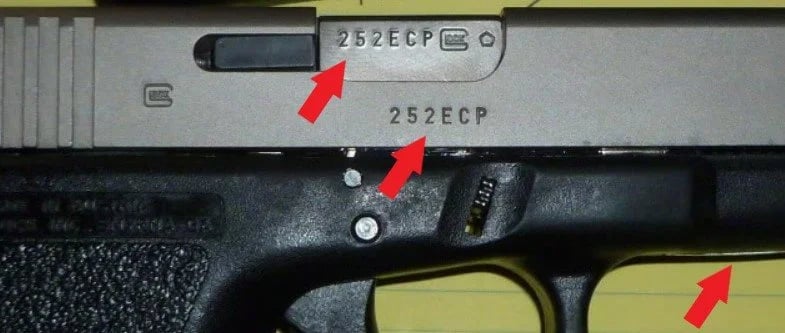
The federal government’s obsession with tracking law-abiding gun owners through manufacturer serial numbers is a modern abomination, not a historical tradition. Let’s cut through the noise: serial numbers weren’t mandated for ownership tracking until the Gun Control Act of 1968—damn near 200 years after the Second Amendment was ratified. Before that, manufacturers slapped unique identifiers on firearms voluntarily, and it was about tracking defective barrels or busted triggers, not feeding some ATF database. The Bruen decision from 2022 gives us the tool to dismantle this garbage once and for all, and it’s time Second Amendment advocates run with it. Here’s why—and how—it applies to everything from your granddad’s shotgun to those 90% frames the feds scream about as “ghost guns.”
Bruen Says History Rules, Not Bureaucratic Whims
The Supreme Court in New York State Rifle & Pistol Association v. Bruen (2022) didn’t mince words: if the plain text of the Second Amendment covers a citizen’s conduct, the government has to prove its restriction matches the “historical tradition of firearm regulation” from 1791—or at least 1868, per the Fourteenth Amendment’s incorporation. Spoiler alert: mandatory serial numbers for ownership tracking don’t show up in the Founding era. Or the 19th century. Or even the early 20th. They’re a mid-20th-century invention, and that’s a problem for the ATF’s whole game plan.
Go dig through the archives—colonial gunsmiths didn’t etch serials for King George to monitor. Early American manufacturers like Colt or Remington sometimes used them, sure, but it was for their own quality control, not some proto-FBI registry. The idea that every musket or revolver needed a number so the government could trace it? Laughable. That’s not tradition; that’s dystopia. Bruen demands analogues from the Founding, not LBJ’s Great Society. The Gun Control Act of 1968 is about as relevant to 1791 as TikTok is to the Federalist Papers.
90% Firearms and “Ghost Guns”: The Panic Is Baseless
Here’s where it gets real. The feds lose their minds over “ghost guns”—unserialized firearms, often 90% completed frames or receivers you finish at home. They claim it’s a crisis, but Bruen exposes the lie. Homemade guns were the norm for most of our history. Settlers forged their own rifles; militias didn’t wait for a factory stamp. If you could hammer out a barrel in 1780 without a serial number, why the hell can’t you mill an AR-15 lower in 2025? The Second Amendment’s text—“keep and bear arms”—covers it, and the government’s got no historical leg to stand on.
The ATF’s 2022 rule on “privately made firearms” (PMFs) tries to force serial numbers on these 90% builds, but it’s flimsy. Courts are already sniffing the Bruen blood in the water—look at Rigby v. Jennings (2022), where a Delaware judge blocked enforcement of a ghost gun ban. The reasoning? No historical precedent. Same logic applies here: if serials weren’t required for ownership in 1791, they can’t be forced on your Polymer80 frame today. The 90% gun hysteria is just the government clutching pearls over a right we’ve had forever.
No Compelling Interest, Just Control
The feds will cry, “Public safety!”—but Bruen doesn’t care about their feelings. It scrapped the old “means-end scrutiny” test where courts could rubber-stamp any law with a half-baked “compelling interest.” Now, it’s history or bust. And history says serial numbers for tracking owners didn’t exist until 1968. Before that, guns flowed freely—no national registry, no serial mandate, no problem. Crime wasn’t tracked by serials; it was handled by sheriffs and posses, not databases. The government’s “interest” in tracing every firearm today is a power grab, not a tradition.
Look at the data: millions of pre-1968 guns—perfectly legal—float around without serials. How many mass shootings trace back to a missing number? Almost none. The ATF’s own stats show most crime guns are stolen, serialized or not. The compelling interest is a myth—control is the motive.
Related Case Law: The Dominoes Are Falling
Bruen isn’t alone—it’s a wrecking ball. Take United States v. Rahimi (2024): the Supreme Court clarified that historical analogues don’t need to be identical, just “relevantly similar.” Bad news for serial number fans—there’s no “similar” tradition of ownership tracking in the 18th or 19th centuries. Then there’s Texas v. ATF (ongoing as of 2025), where silencers are under fire. Texas AG Paxton’s using Bruen to argue the NFA’s suppressor rules lack historical roots—same logic applies to serials. And don’t forget the ATF’s automatic weapon headaches—courts are chipping away at those regs too, like in Mock v. Garland (2023), where forced reset triggers got a Bruen boost.
The pattern’s clear: if it ain’t historical, it’s toast. Serial numbers are next.
The Fix: Stop Tracking Citizens, Period
Here’s the play: Second Amendment groups need to sue. Now. File in every circuit. Demand the ATF and feds justify serial number mandates under Bruen’s history test—they can’t. Push to strike 18 U.S.C. § 923(i)—the 1968 law requiring serials on all new guns—and kill the PMF rule. No more ownership tracking. Manufacturers can keep serials for their own defect recalls, like they did for centuries. Citizens keep their privacy. The government stays out.
Harsh truth: if you think “mid-20th century” cuts it under Bruen, you’re dreaming. The court said 1791—or 1868 at the latest. 1968 is a non-starter. Tighten your argument or lose. But the bones are there: serial numbers for tracking are a modern shackle, not a historical chain. Break it.
Send This to the Activists
Gun Owners of America, Second Amendment Foundation, Firearms Policy Coalition—here’s your ammo. I’m done repeating myself. Share this link, light the fuse, and let’s bury the ATF’s tracking fetish in the dustbin of history where it belongs.