Nothing Compares: Freedom vs. the One
Prince, Sinéad, and the divine masculine and feminine
"Nothing Compares 2 U" is a man's song that only became itself in a woman's voice.
Prince wrote it in the mid-'80s for his side project The Family, and almost nobody heard it. Then in 1990 Sinéad O'Connor sang it, bald, in close-up, with a tear rolling down her face, and it went to number one around the world. Same words, same melody. It took the feminine to make it land.
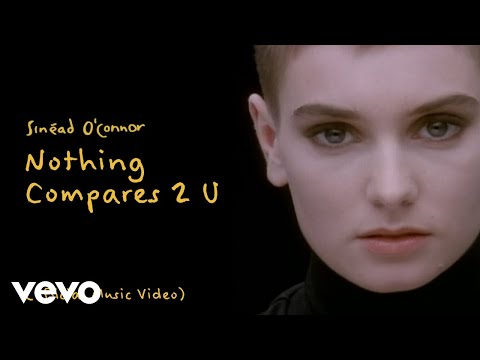
That's what this post is about.
What the song actually says
Strip it down and the singer has every freedom there is. They can go out, see anyone, do whatever they want. And none of it matters, because none of it comes close to the one person who's gone.
Freedom without the one you want is just empty space.
You go do that
Listen to what the singer claims: she can go out whenever she wants, see whoever she wants, sleep all day. That's Sinéad trying on masculine freedom as rebellion. But it doesn't fit her, and the song knows it. Every freedom on the list ends in the same place: it's nothing next to him.
The divine masculine's answer to that list is simple: you go do that. He isn't going to chase it, and he isn't going to fight a crowd of bozos over a lock that's handed out ten keys. He'd rather walk. That's the difference. The masculine can be free and mean it. The feminine in this song has all the freedom she could want, and the one thing she's got a taste for is the one thing she can't have.
The divine feminine gave it a face
Prince's version never broke through. Sinéad's did, and I don't think that's an accident. The song needed a woman to sing it. Coming from a man it's a complaint. Coming from her it's a wound.
And Sinéad wasn't just any woman. She shaved her head because, as she told it, she didn't want to be the pretty girl the industry wanted. She wanted to be taken seriously. That's a masculine move in a feminine body. Beauty is the reason men go to war: to come home to that face, or just to know a face like that exists. Sinéad refused to be that face, and the world still couldn't look away.
And she went to war herself. Her WAR was real, and she paid for it.

To me she was Cassandra, the prophet nobody believed until it was too late, or the Morrígan, Ireland's phantom queen of war and prophecy: wild, armored, unclaimed. Which raises the real question. Who partners with the Morrígan? Not a bozo. Someone who's earned it.
Freedom vs. the one
This is the part that goes beyond the song.
We live in the age of abundance. When I was a kid you had one Nintendo cartridge, three lives, and Nintendo Power. You played that game until you knew every jump. Then emulators gave you every game ever made, and suddenly none of them mattered. Vinyl to Spotify, same thing.
Dating apps did it to people. When there's always someone else one swipe away, nobody is irreplaceable. Everybody is free, and nobody gets to have the experience this song is about: the one person nothing else compares to.
Prince wrote the warning back in the '80s. Sinéad made the world feel it. We swiped right past it anyway.
For Sinéad
Sinéad died in July 2023. That summer, at Burning Man, I sang this song through a megaphone for two and a half hours, until my lips bled on the mic. People tried to make me stop. It didn't exactly work. (More in Sinead O'Connor, and the gift idea it inspired: the Nothing Compares 2U ISD1820 player.)
She would have hated Burning Man. That's part of why I did it there.
Happy (-59)
A small sample from the playa, 2023:
