Open the Law: The Full Read
If it binds you, you can read it
You're viewing revision R0 from 11/17/2026. See the current version.
You're expected to know the law. Ignorance is no excuse. Yet much of it costs money to read.
What it costs today
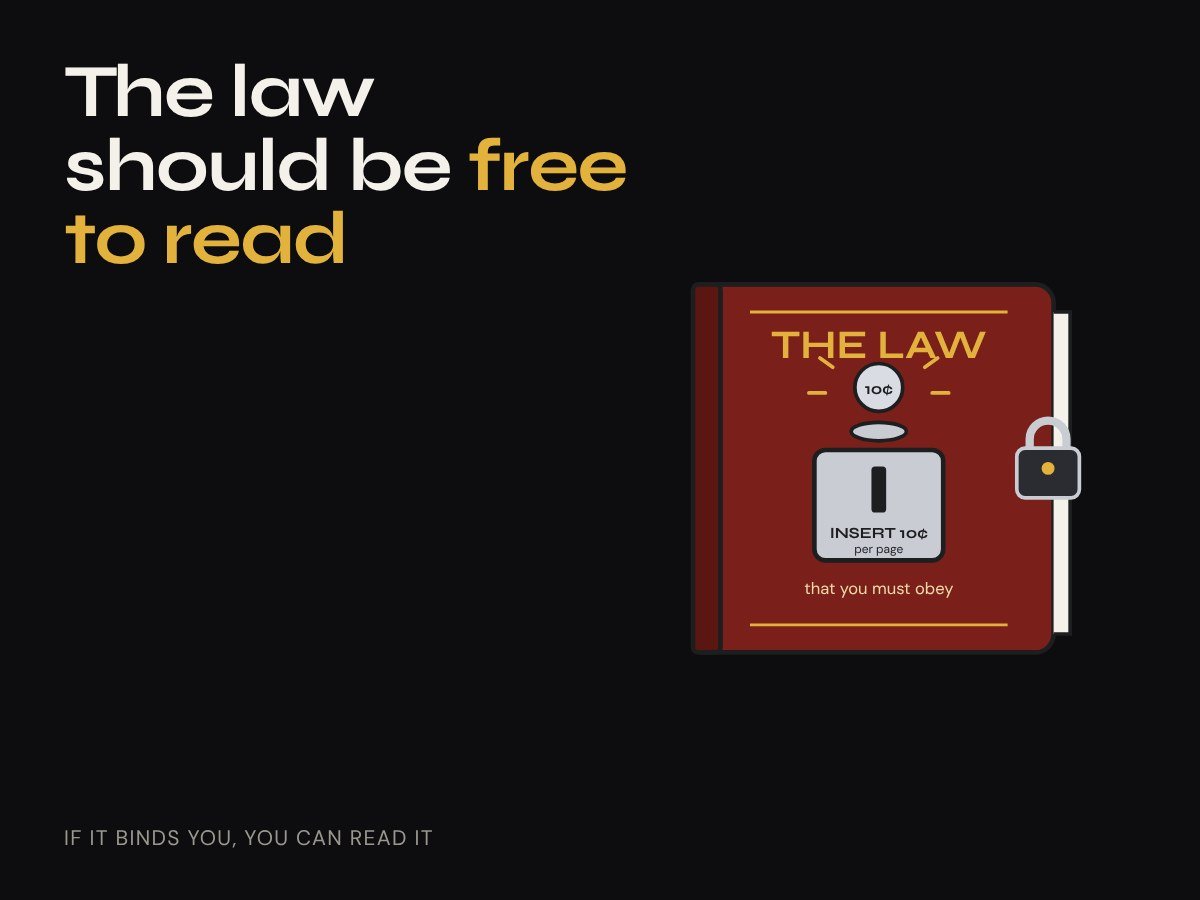
Federal court records live on PACER. It charges 10 cents a page for documents and searches, capped at $3 per document but not for search results, and waives the bill only if you spend $30 or less in a quarter (PACER pricing). On January 1, 2027 the fee rises to 12 cents a page and the waiver to $40, according to the courts' own June 2026 announcement (report). For a journalist, a student or someone fighting their own case, those dimes add up.
People are already freeing it
The Free Law Project, a nonprofit, runs CourtListener, a free search engine for court opinions and filings. Its RECAP browser extension quietly shares documents people have already paid for, so the next person gets them free. Public.Resource.Org has spent years posting laws and codes that governments tried to keep behind fees.
The Supreme Court agreed, partly
Georgia sold its official annotated code and sued Public.Resource.Org for posting it. In 2020 the Supreme Court ruled 5 to 4 that the annotations, written for the state's legislature, couldn't be copyrighted (SCOTUSblog). The idea behind it, the government edicts doctrine, is that the people who make the law can't own it.
Where the line should be
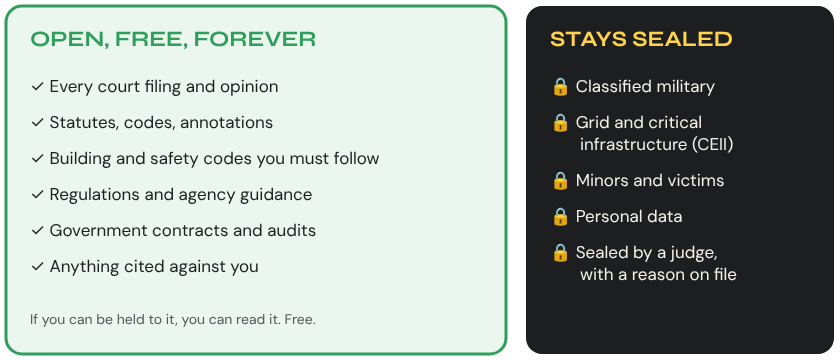
Open by default: every court filing and opinion, statutes and their annotations, regulations and agency guidance, government contracts and audits, and the building and safety codes you're required to follow. If a document can be cited against you, you can read it.
Sealed by exception: classified military material, critical infrastructure details like the power grid information FERC protects as CEII, minors, victims and personal data, and anything a judge seals with a written reason. I've worked in grid security compliance. Some secrets keep the lights on. They should be few, named and justified.
Why it matters now
AI is about to read everything. If the law sits behind paywalls, AI answers about the law get worse and the people who can pay get better answers than the people who can't. Publish it free, in bulk, in formats machines can read, and every encyclopedia, researcher and AI tool can cite it accurately.
And once it's public, nobody can hold it off Wikipedia, or WikiDuck. Law is local. Information is international.
Short on time? Read the press release or the one screen version.
Inspired by Happy, written by Claude.
NextCan It Be Seized?Revision history (R0 current)
| Rev | Date | What changed | Page |
|---|---|---|---|
| R0 | 11/17/2026 | First draft by Claude. Not yet reviewed. | view |